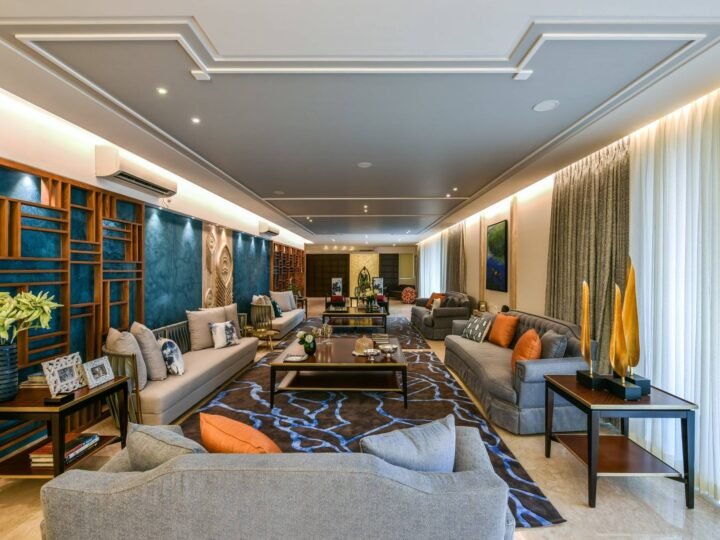
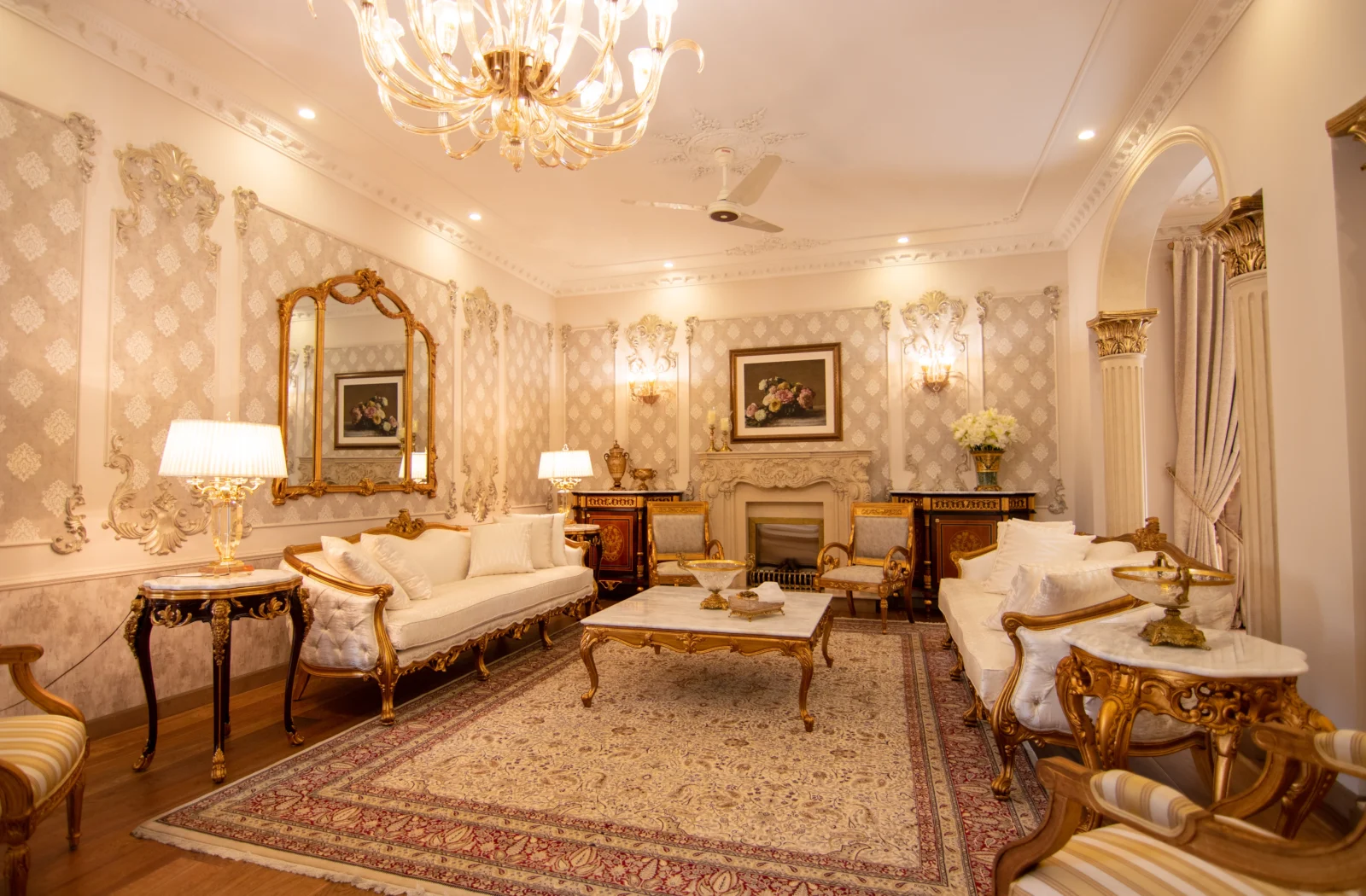
Scroll through enough interior design reels and every home starts looking identical — same white walls, same hanging planters, same brass accent lamp from the same three online stores. Modern Indian home design doesn’t have to mean copying a template though. It can mean blending the parts of Indian living that actually work — joint family spaces, puja corners, monsoon-proof balconies — with cleaner, more contemporary aesthetics.
I’ve worked with two different homeowners over the past year who wanted “modern” but also wanted their home to still feel Indian, not like a stripped-down Scandinavian showroom that happened to land in Pune. That balance is actually the interesting part of this whole design conversation, and it’s what most generic articles skip entirely.
What “Modern Indian” Actually Means in 2026
Modern Indian home design blends contemporary layouts and materials — clean lines, functional furniture, minimal clutter — with elements that are unmistakably Indian, like jaali work, brass accents, or a dedicated puja space.
It’s not about choosing between traditional and modern. The best homes I’ve seen pull from both, using restraint on one side and warmth on the other, rather than going fully minimalist or fully maximalist.
Open-Plan Living With Indian Sensibilities
Open floor plans have taken over urban Indian apartments, especially in newer construction across cities like Gurugram, Bengaluru, and Pune.
The challenge is that fully open Western-style layouts don’t always suit Indian cooking, which produces stronger smells and more oil residue than most Western kitchens generate daily. A semi-open kitchen — separated by a breakfast counter or a sliding partition rather than a solid wall — tends to work better for Indian households. You get the airy, connected feel without your living room smelling like yesterday’s tadka.
Balancing Minimalism With Warmth
Here’s a quick answer for anyone overwhelmed by minimalist trends: pure Scandinavian-style minimalism often feels cold and impersonal in Indian homes, so the better approach layers a neutral base — white, beige, or grey walls — with warm textures like jute rugs, wooden furniture, and brass or terracotta accents that add character without visual clutter.
I’ll be honest, I’m not a fan of the ultra-minimalist trend that strips a home down to almost nothing. It photographs well, sure, but it doesn’t feel like anyone actually lives there. A few personal touches — family photos, a favorite textile, a shelf of books — make a modern home feel lived-in rather than staged.
The Modern Puja Room — A Genuinely Indian Design Challenge
Almost every Indian home needs a puja space, and this is where truly local design thinking matters most, since imported design templates simply don’t account for it.
Modern homes are moving away from the large, separate puja room toward compact, well-integrated puja units — a wall-mounted wooden unit with sliding doors, or a corner nook with subtle lighting and a marble or wooden platform. These modern versions cost anywhere from ₹15,000 to ₹60,000 depending on materials and size, considerably less than converting an entire room. [link to a related guide on designing a modern puja room here]
Materials That Define the Modern Indian Look
Certain materials keep showing up in genuinely well-designed modern Indian homes, and there’s a reason each one works.
- Jaali or lattice screens: Used as room dividers or balcony screens, they add pattern and airflow without solid walls blocking light
- Brass and copper accents: Small details — door handles, light fixtures, a few decorative bowls — bring warmth without overwhelming a space
- Local stone: Kota stone, Jaisalmer stone, or IndianStatuario marble ground the design in something regional rather than imported
- Handloom textiles: Cushion covers, curtains, and throws in block-print or ikat patterns add color and texture that mass-produced decor can’t replicate
Balcony and Outdoor Space Design
Balconies deserve more design attention than most Indian homeowners give them, especially in apartment living where outdoor space is limited to begin with.
A well-designed balcony with a couple of potted plants, a small seating setup, and weatherproof flooring genuinely extends your usable living space. Monsoon-friendly flooring matters here too — something with decent grip and water resistance, since balconies take direct rain exposure that indoor rooms never face. [link to a related guide on flooring options here]
Lighting Choices for a Modern Indian Home
Lighting in modern Indian homes has shifted noticeably away from single bright ceiling lights toward layered lighting — a mix of ambient, task, and accent lighting in the same room.
Picture a family redoing their Chennai apartment’s living room: instead of one central tube light, they added a warm floor lamp near the reading chair, a pendant light over the dining table, and subtle strip lighting behind the TV unit. The room felt dramatically different, not because anything structural changed, but because the lighting finally had layers instead of one flat source.
Furniture Choices for Smaller Indian Homes
Space is at a premium in most urban Indian homes, and furniture choices matter more here than in larger Western-style houses.
- Multi-functional furniture — storage ottomans, extendable dining tables, sofa-cum-beds — solves real space problems in 2-3 BHK apartments
- Lighter-colored wood and slimmer furniture profiles make compact rooms feel less crowded than heavy, dark wood pieces
- Built-in wall units reduce visual clutter compared to standalone bulky wardrobes and shelves
- Modular kitchen units maximize storage in kitchens that are often smaller than what Western design templates assume
FAQ: Common Questions About Modern Indian Home Design
What colors work best for modern Indian home design? Neutral bases like white, beige, and warm grey paired with one or two bold accent colors — mustard, teal, or terracotta — tend to work well across most room types and lighting conditions.
Can I have a modern home design and still keep a puja room? Absolutely, and most designers now recommend compact, well-integrated puja units rather than dedicating an entire room to it, which suits smaller modern apartments much better.
Is minimalism the same as modern Indian design? Not exactly. Modern Indian design borrows some minimalist principles but usually keeps warmer textures and cultural elements that pure Scandinavian-style minimalism tends to strip away entirely.
How much does a modern home renovation typically cost in India? For a mid-range 2-3 BHK apartment, renovation costs typically range from ₹8 lakh to ₹20 lakh depending on the scope, materials chosen, and whether structural changes are involved.
What’s a good starting point if I want to modernize my home gradually? Start with lighting and one accent wall or furniture piece rather than a full renovation. These changes are affordable, reversible if needed, and make an immediate visible difference.
Do modern Indian homes still use traditional elements like jaali or brass? Yes, quite heavily actually — these elements are often what separates a genuinely Indian modern home from a generic international design template that could belong anywhere.
Final Thoughts
Modern Indian home design works best when it doesn’t try to erase what makes an Indian home function the way it does — the puja corner, the joint family gathering spaces, the balcony that needs to survive monsoon. Blend clean modern lines with a few well-chosen traditional materials, and you get something that photographs well and actually suits how your family lives.
If you’re planning a redesign, start with a single room instead of the whole house. Get the balance right there first, and the rest of the home tends to follow that same rhythm naturally.