
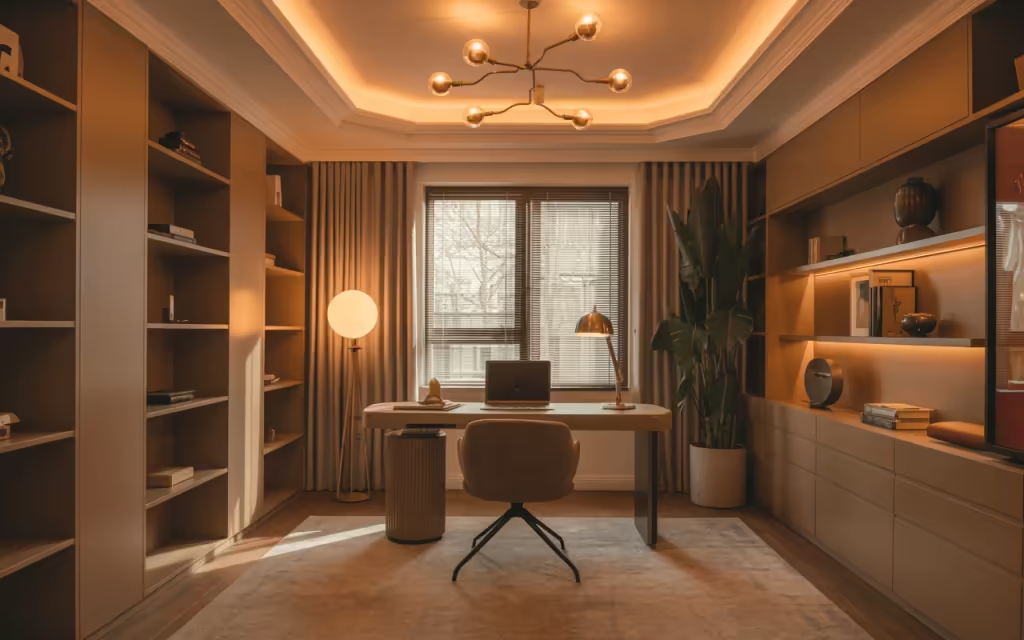
Working from your bed with a laptop balanced on your knees felt fine for a week or two. Years later, if you’re still doing it, your back probably has opinions about that decision. Good home office renovation ideas aren’t about building a fancy corporate-style office at home — they’re about creating one dedicated spot where your brain switches into “work mode” the moment you sit down.
I converted a genuinely awkward, oddly shaped storage nook into my own home office a couple of years back, and it remains one of the better decisions I’ve made for my daily sanity. This guide covers what actually matters — space planning, lighting, storage, and the details that separate a real home office from a laptop perched on a kitchen counter — with practical Indian pricing for 2026.
Finding Space for a Home Office in a Small Home
Featured answer: A dedicated home office doesn’t need a spare room — a balcony corner, an underused storage nook, a section of a bedroom divided with a partition, or even a well-organised closet can be converted into a functional workspace with proper lighting and storage.
Has this ever happened to you — scrolled through home office inspiration photos, all featuring spacious spare rooms, while your actual home has zero spare rooms to spare? Most Indian homes don’t have that luxury, and honestly, that’s fine.
Look at underused corners first. A covered balcony, the awkward space beside a wardrobe, even a wide hallway nook, can all work with the right compact setup.
Choose the Right Desk for Your Space
Desk choice matters more than people expect, especially in a tight footprint.
- Wall-mounted folding desks (₹2,500-6,000) work beautifully in tiny spaces, folding flat when not in use
- Corner desks maximise awkward angular spaces that a standard rectangular desk would waste
- A simple table with proper legroom beats a stylish but cramped one — comfort matters more than looks here
- Standing desk converters (₹4,000-10,000) are worth considering if you’re at the desk for long stretches daily
Lighting: The Detail Most People Get Wrong
Featured answer: Position a home office desk perpendicular to a window rather than directly facing it, to avoid screen glare while still benefiting from natural light. Supplement with a warm-toned desk lamp (2700-3500K) for evening work, since overhead lighting alone often causes eye strain during video calls or extended screen time.
I’ve noticed people either work in near-darkness with just their laptop screen glowing, or under a single harsh overhead tubelight — neither is great for eye strain over a full workday.
[link to related guide on how to increase natural light in your home here]
A desk lamp with adjustable brightness genuinely helps for video calls too, avoiding that washed-out or overly shadowed look on camera.
Soundproofing for Video Calls and Focus
Indian homes, especially in dense apartment buildings, aren’t exactly known for silence. If your work involves regular calls, this is worth addressing during renovation.
- Add a thick rug or carpet to absorb sound reflections in a hard-floored room
- Bookshelves against a shared wall genuinely help dampen sound transfer
- Heavy curtains absorb more ambient noise than blinds
- For serious noise issues, acoustic foam panels (₹150-400 per panel) offer a budget-friendly partial fix
Picture a small business owner in Jaipur who runs client calls from a home office she converted from an old storage room — she lined one wall with a simple bookshelf and added a rug, and the difference in call audio quality was noticeable enough that clients actually commented on it.
Storage Solutions for a Cluttered-Free Workspace
A cluttered desk genuinely affects focus more than people give it credit for.
- Wall-mounted shelves keep frequently used items accessible without eating desk space
- A closed cabinet for paperwork and cables keeps visual clutter out of video call backgrounds
- Cable management boxes (₹300-600) hide the tangle of charger and monitor cables that accumulate fast
[link to related guide on how to style open shelves without clutter here]
Choosing Colours and Materials for Focus
Colour genuinely affects mood and focus, and it’s worth a bit of thought rather than defaulting to whatever paint was already on the wall.
- Soft blues and greens are commonly associated with calm, sustained focus
- Avoid overly bright or saturated colours directly in your line of sight — they can be visually tiring over long work hours
- A mix of matte and natural wood textures tends to feel less sterile than an all-white setup
[link to related guide on scandinavian home design style guide here]
Ergonomics: Don’t Skip This Part
A renovated office that still gives you a backache defeats the purpose.
- Invest in a proper ergonomic chair (₹5,000-15,000) rather than a dining chair repurposed for daily 8-hour use
- Monitor height should keep your eyes roughly level with the top third of the screen
- Keep frequently used items within arm’s reach to avoid repetitive twisting or reaching
FAQ: Common Questions About Home Office Renovation
How much does a basic home office renovation cost in India? A functional setup with a proper desk, chair, and lighting typically costs ₹15,000-40,000, while a fuller renovation involving partitions or built-in storage can run ₹50,000-1.5 lakh.
Can I create a home office without a spare room? Yes — balconies, closet conversions, bedroom corners with a partition, and underused nooks all work well with compact furniture and good lighting.
What’s the most important element of a home office renovation? Lighting and ergonomics matter most for long-term comfort and focus, even more than aesthetics, since these directly affect daily physical strain and productivity.
How do I soundproof a home office on a budget? Rugs, bookshelves against shared walls, and heavy curtains all absorb sound noticeably without needing expensive acoustic treatment.
Should I position my desk facing the window? Generally no — facing a window directly causes screen glare on video calls; positioning the desk perpendicular to the window balances natural light without the glare issue.
Is it worth investing in an ergonomic chair for a home office? Yes, especially for anyone working 6+ hours daily — the long-term comfort and reduced back strain genuinely justifies the upfront cost compared to a repurposed dining chair.
[link to related guide on smart home upgrades worth the investment here]
Wrapping It Up
A genuinely good home office renovation doesn’t need a spare room or a big budget — it needs the right desk for your space, proper lighting, some thought toward noise, and a chair that won’t wreck your back after month one. Small, deliberate choices matter more here than square footage.
If you’re still working from a makeshift setup, pick one element from this list — even just the chair or the lighting — and fix that first. You’ll notice the difference in how you feel by the end of the workday.