Slower water flow, a faint plasticky taste, or that little red light blinking on your purifier that you’ve been ignoring for weeks — has this ever happened to you? Most people install an RO system, forget it exists beyond pressing the tap, and only think about RO water purifier maintenance once something’s obviously gone wrong. By then, you might’ve been drinking under-filtered water for months without realising.
I was genuinely guilty of this for the first two years I owned an RO unit. Changed the filter once, vaguely, whenever the service guy happened to call. Turns out that’s not how it’s supposed to work at all. This guide breaks down the actual maintenance schedule your RO system needs, why it matters more than people think, and realistic costs for Indian households in 2026.
Why RO Water Purifier Maintenance Actually Matters
Featured answer: Regular RO water purifier maintenance ensures filters and membranes function properly, preventing bacterial growth, reduced purification efficiency, and unpleasant taste or odour in drinking water. Neglected maintenance can actually make purified water less safe than unfiltered tap water, since old filters can harbour bacteria rather than removing it.
This is the part that genuinely surprised me when a technician explained it properly. A dirty, overdue filter isn’t neutral — it can actively make water worse, becoming a breeding ground for bacteria rather than blocking it.
I’d push back a little on how casually RO brands market these systems as “set and forget.” They’re really not. The purification is only as good as the maintenance behind it.
Understanding What’s Inside Your RO System
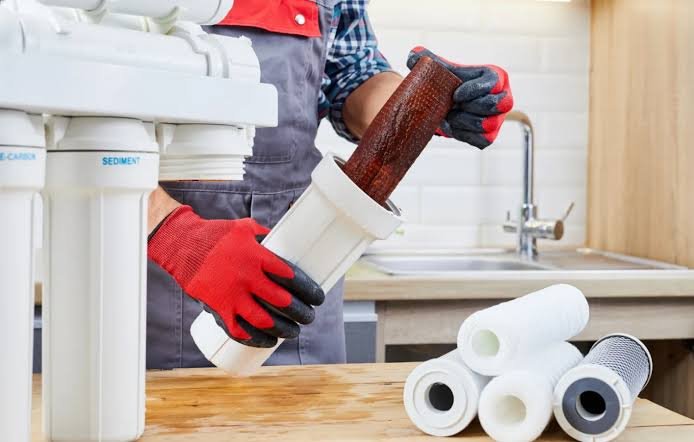
Most Indian RO purifiers use a multi-stage filtration process, and each stage needs different attention.
- Sediment filter — catches larger particles like sand and rust, needs replacement most frequently
- Carbon filter — removes chlorine and improves taste, also needs regular replacement
- RO membrane — the core purification component, removes dissolved impurities and heavy metals
- UV/UF filter (if your system has one) — kills bacteria and viruses, needs periodic checking too
- Mineral cartridge (in some models) — adds back essential minerals after purification
Knowing which stage is which helps you understand exactly what a service technician is actually replacing, rather than just nodding along and paying whatever’s quoted.
Filter Replacement Schedule
Featured answer: Sediment and carbon filters in RO systems typically need replacement every 4-6 months, the RO membrane every 12-24 months depending on water quality, and UV lamps annually. Following this schedule costs roughly ₹1,500-3,000 per year for most households and prevents both taste issues and reduced purification effectiveness.
- Sediment filter — every 4-6 months, more frequently if your local water has high sediment content
- Carbon filter — every 4-6 months, alongside the sediment filter typically
- RO membrane — every 12-24 months, the most expensive component to replace (₹800-2,000)
- UV lamp — annually, since UV effectiveness degrades even if the light still appears to be on
- Mineral cartridge — every 6-8 months if your system includes one
Signs Your RO System Needs Immediate Attention
Has this ever happened to you — water suddenly tastes different, and you can’t quite place why? That’s usually your first warning sign, not something to dismiss.
- Noticeably slower water flow than usual
- A metallic, plasticky, or otherwise off taste
- Visible cloudiness in the purified water
- Unusual noise from the unit during operation
- The TDS (total dissolved solids) reading, if your unit displays one, jumping significantly higher than normal
How to Check TDS Levels Yourself
A simple TDS meter (₹300-600) is genuinely worth owning if you have an RO system.
- Test the water directly from your RO tap
- Compare against the recommended range — generally 50-150 ppm for purified drinking water
- A reading significantly above 150 ppm suggests the membrane may need replacement
- Test monthly as a quick health check between full servicing visits
Picture a small business owner in Jaipur running an RO unit for her office pantry — she started testing TDS monthly after noticing staff complaints about water taste. Turned out the membrane, overdue by nearly six months, was letting more dissolved solids through than it should. A ₹1,200 replacement fixed it completely.
[link to related guide on common plumbing problems and how to fix them here]
Cleaning the Storage Tank
The storage tank inside your RO unit needs periodic cleaning too, something most people genuinely never think about.
- Clean every 6 months, or more often in humid climates prone to algae or mould growth
- Use a mild vinegar solution to disinfect, followed by thorough rinsing
- A musty smell from stored water is usually a sign the tank needs cleaning
Annual Maintenance Cost Breakdown
For a typical household RO system, expect the following rough annual costs:
- Filter and membrane replacements: ₹1,500-3,000
- Professional servicing visits (2-3 per year): ₹600-1,500
- Total annual maintenance: roughly ₹2,000-4,500 depending on brand and local water quality
[link to related guide on home maintenance schedule monthly and yearly tasks here]
DIY vs Professional Servicing
Filter and cartridge replacements are reasonably DIY-friendly if you’re comfortable following the manufacturer’s instructions and have the right replacement parts. Membrane replacement and any internal component troubleshooting are better left to a trained technician, given the precision needed for proper sealing and calibration.
FAQ: Common Questions About RO Water Purifier Maintenance
How often should I service my RO water purifier? Professional servicing every 4-6 months is recommended, alongside self-checks like TDS testing done monthly between visits.
Can I drink water from an RO system with an overdue filter? It’s not advisable — an overdue filter can harbour bacteria and reduce purification effectiveness, potentially making the water less safe than properly filtered tap water.
What’s a normal TDS level for RO purified water? Generally 50-150 ppm is considered ideal for taste and mineral balance; readings significantly above this range suggest the membrane needs attention.
How much does RO water purifier maintenance cost per year? Most households spend roughly ₹2,000-4,500 annually on filter replacements and professional servicing combined, depending on the brand and local water hardness.
Why does my RO purified water taste different sometimes? A change in taste usually indicates a filter overdue for replacement, or occasionally a change in your municipal or borewell water source affecting input quality.
Is it necessary to clean the RO storage tank separately? Yes, every 6 months roughly, since the tank can develop algae or mould buildup over time even if the filters themselves are functioning properly.
[link to related guide on how to unclog a drain naturally here]
Wrapping It Up
RO water purifier maintenance isn’t complicated, but it does need a bit more attention than most people give it — filters on a schedule, periodic TDS checks, and annual tank cleaning cover most of what actually matters. Skipping it doesn’t just waste money on an underperforming unit; it can genuinely affect the water quality you’re relying on daily.
If it’s been more than six months since your last service, that’s the one thing worth booking this week — your drinking water quality genuinely depends on it.