Terrace Garden Ideas for Apartments (2026 Guide)
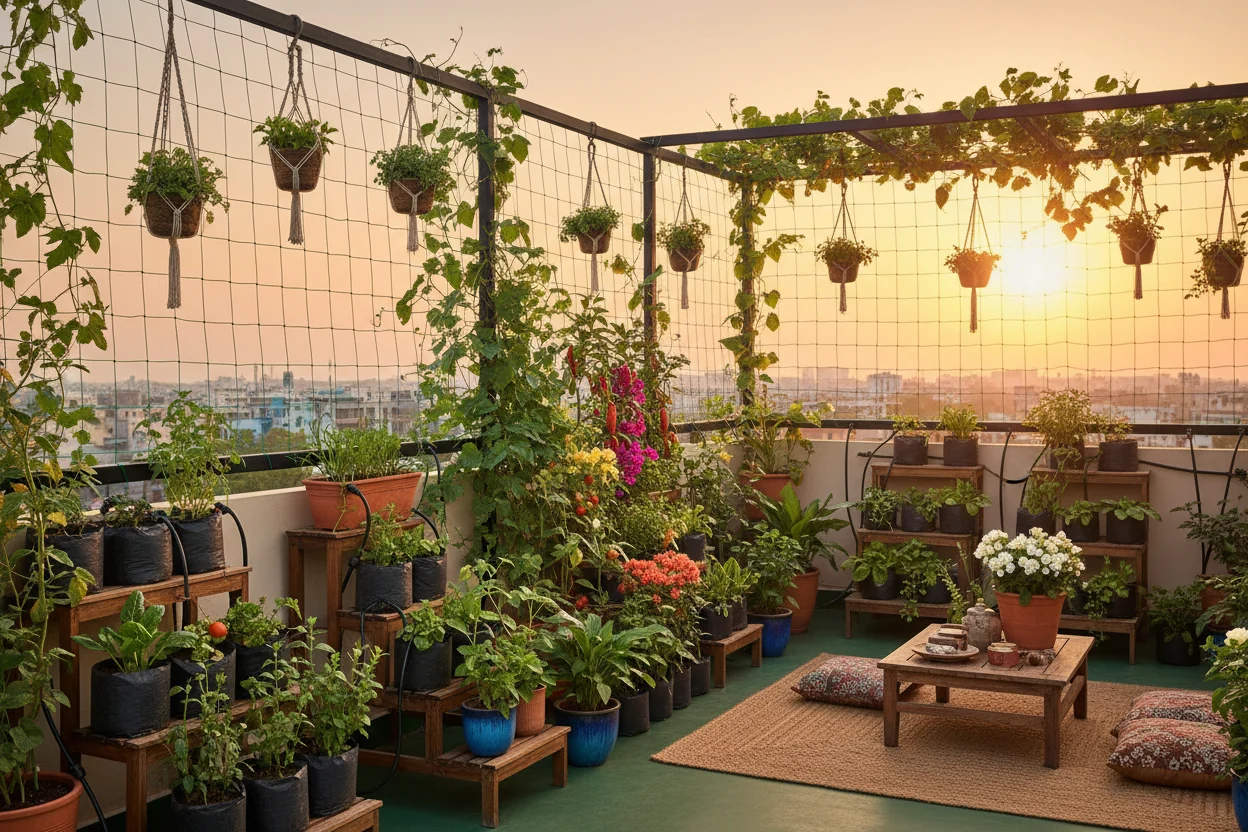
That empty terrace or balcony space, sitting there unused except for the occasional drying laundry — has this ever happened to you, walking past it daily and thinking “I really should do something with this”? Good terrace garden ideas for apartments don’t need to be ambitious rooftop farms. Even a modest setup can genuinely transform an unused outdoor space into somewhere you actually want to spend time.
I turned a fairly neglected terrace corner into a small garden a couple of years ago, learning through a fair number of dead plants exactly what does and doesn’t survive Indian terrace conditions — brutal summer sun, strong winds at height, and inconsistent watering when life gets busy. This guide covers what genuinely works, based on real trial and error, for apartment terraces in 2026.
Understanding Your Terrace’s Specific Conditions First
Featured answer: Before starting a terrace garden, assess sunlight exposure (hours of direct sun daily), wind intensity (higher floors face stronger, drying winds), and weight-bearing capacity of the terrace structure. These three factors determine which plants and container types will actually survive long-term.
Related home guide: Best Air Purifying Indoor Plants for Your Home (2026) →
I’ve noticed people jump straight into buying plants without checking any of this first, then wonder why everything dies within a month. Your terrace’s specific conditions genuinely matter more than any generic plant list.
Higher floors deal with stronger wind, which dries out soil faster and can physically damage taller or more delicate plants. South and west-facing terraces get intense afternoon sun that many plants simply can’t tolerate without some kind of shade structure.
Check Weight Limits Before You Start
This is genuinely the step most people skip entirely, and it matters more than it sounds.
- Most residential terraces can safely handle moderate container gardening, but confirm with your building’s structural guidelines if you’re planning a larger setup
- Distribute weight evenly rather than clustering heavy pots in one corner
- Use lightweight materials (fibre or plastic pots) rather than heavy ceramic or concrete for larger containers
- Avoid soil-heavy raised beds unless your terrace was specifically designed for that load
[link to related guide on how to plan a home improvement budget here]
Choosing the Right Containers
Featured answer: For apartment terrace gardens, lightweight fibre or plastic containers with proper drainage holes work best, since they’re easier to move, retain moisture better than clay in windy conditions, and reduce overall structural weight compared to heavier alternatives.
- Fibre pots (₹150-500 depending on size) — lightweight, durable, and hold moisture reasonably well
- Plastic containers — cheapest option, widely available, though less breathable for root health
- Grow bags (₹50-150) — genuinely excellent for vegetables, inexpensive, and easy to reposition
- Vertical planters or wall-mounted pockets — maximise limited floor space, ideal for smaller terraces
Always check drainage holes before buying, or drill your own if needed — waterlogged roots are one of the fastest ways to kill terrace plants, especially during monsoon.
Best Plants for Windy, Sunny Terrace Conditions
Not every plant that looks good in a nursery survives actual terrace conditions.
- Bougainvillea — genuinely thrives in full sun and tolerates wind exceptionally well
- Aloe vera and succulents — low maintenance, drought-tolerant, ideal for busy schedules
- Curry leaf plant — practical, useful in cooking, and handles Indian heat well
- Hibiscus — colourful, sun-loving, reasonably wind-tolerant once established
- Marigold — easy, fast-growing, and works well as a seasonal colour addition
Has this ever happened to you — bought a delicate, shade-loving plant for a terrace that gets six hours of direct afternoon sun? Match the plant to your actual conditions rather than what simply looked appealing at the nursery.
Setting Up a Kitchen Garden Section
Picture a small business owner in Jaipur who converted a corner of her terrace into a small kitchen garden — tomatoes, chillies, and a curry leaf plant, mostly for her own cooking. What started as a modest experiment now supplies a genuinely noticeable portion of her weekly vegetables, and she’s mentioned it’s become the part of her day she looks forward to most.
[link to related guide on how to start a vegetable garden at home here]
Grow bags work particularly well for this — tomatoes, chillies, and leafy greens all do reasonably well in containers, provided they get adequate sun and consistent watering.
Creating Shade and Wind Protection
For terraces with intense afternoon sun or strong wind exposure, some structural additions genuinely help plants and people alike.
- A simple shade net (₹500-1,500 depending on size) reduces harsh afternoon sun without blocking all light
- Bamboo or reed screening breaks wind intensity while adding a natural aesthetic
- Pergolas, if your terrace and budget allow, create a genuinely usable shaded seating area alongside the garden
Watering Systems for Consistency
Inconsistent watering kills more terrace plants than people realise, especially during busy work weeks.
- Simple drip irrigation kits (₹1,500-4,000) automate watering, particularly useful if you travel often
- Self-watering containers with a reservoir reduce daily watering needs significantly
- Group plants with similar water needs together, rather than watering everything on the same schedule regardless of individual requirements
[link to related guide on best indoor plants for air purification here]
FAQ: Common Questions About Terrace Garden Ideas
Can I start a terrace garden without professional help? Yes, absolutely — most apartment terrace gardens are entirely DIY-friendly, starting small with a few containers and expanding gradually as you learn your terrace’s specific conditions.
How much weight can a typical apartment terrace hold for gardening? This varies significantly by building, so it’s worth checking with your building’s structural documentation or a professional if you’re planning anything beyond moderate container gardening.
What plants survive best on a windy, high-floor terrace? Bougainvillea, succulents, and hardy flowering plants like hibiscus generally tolerate wind and intense sun better than delicate, shade-loving varieties.
Do I need permission from my building to start a terrace garden? Check your building’s specific rules, since some housing societies have guidelines around terrace use, water drainage, and weight limits for gardening setups.
How often should I water terrace plants in Indian summer? Daily watering is often necessary during peak summer heat, though a drip irrigation system or self-watering containers can reduce the need for constant manual attention.
Is it expensive to start a terrace garden? Not necessarily — a basic setup with a few grow bags, hardy plants, and simple tools can cost under ₹3,000, with costs scaling up based on how elaborate you want the setup to be.
[link to related guide on biophilic design ideas for modern homes here]
Wrapping It Up
Good terrace garden ideas genuinely start with understanding your specific space — sun, wind, and weight capacity — rather than copying a Pinterest photo exactly. Match plants and containers to your real conditions, and even a modest terrace can become a space you actually enjoy using.
Start small this season — a few grow bags with hardy plants like curry leaf or marigold — before investing in anything elaborate. See what survives and thrives in your specific terrace before committing to a bigger setup.
Explore more: Home Improvement · Renovations · Maintenance · Plumbing · Decorating ·
